

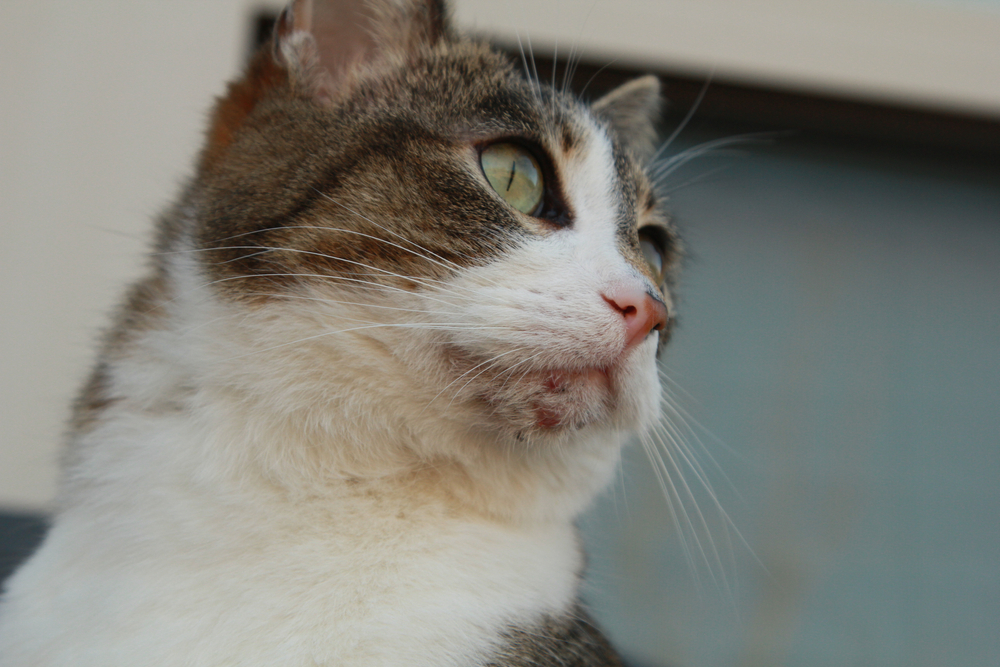
If you’ve ever lifted your cat’s chin and thought, “Why does this look like dirt… or pimples?” — you’re not alone. Cats can absolutely get acne, and it’s more common than most people realize.
We call it feline acne, but don’t worry — she isn’t going through a rebellious teenage phase! This has nothing to do with hormones. Instead, it happens when the skin produces too much oil, which clogs hair follicles and can lead to irritation or infection. Some cats only deal with it once in a while, while others may have flare-ups throughout their lives.
Where does cat acne show up?
Almost always on the chin and lower lip area. If you’re seeing changes anywhere else on the face, that’s a good reason to check in with us.
What does it look like?
Cat acne can start out pretty subtle and get worse over time. You might notice:
- Tiny black specks that look like dirt
- Small bumps or scabs under the chin
- Swelling or tenderness
- Hair thinning or hair loss
- Extra face rubbing or chin scratching
- Crusty or oily discharge
- A not-so-pleasant smell around the mouth
In more severe cases, the area can become painful or infected, which may even affect your cat’s appetite and energy level.
What can you try at home?
For mild cases, a few simple changes can go a long way:
- Ditch plastic bowls. Plastic can trap bacteria and oils. Switching to stainless steel or ceramic bowls is one of the easiest and most effective steps. Clean often just like our own dishes, they can accumulate bacteria.
- Keep the chin clean. Gently wiping the area with a warm, damp cloth once or twice a day can help remove oil buildup. Be gentle — no popping or picking.
- Skip the DIY remedies. Essential oils, human acne products, and random home treatments can be dangerous for cats.
Please don’t use tea tree oil or essential oils. Even small amounts can cause serious toxicity in cats. This is a topic for another day.
When is it time to call the vet?
If the chin looks painful, swollen, infected, or just isn’t improving after a few days, it’s time for a veterinary visit. Some cats need prescription topical treatments, antibiotics, or additional testing to rule out other skin issues.
We may also recommend shaving the area so it’s easier to clean and treat — not glamorous, but very helpful.
One last important reminder
Human acne medications and over-the-counter antibiotic ointments are not cat-safe unless specifically prescribed. Cats process medications very differently than people, and some common products can cause severe reactions.
!!!! Neosporin IS NOT SAFE for cats because while not often, some cats can have severe allergic reactions, including facial swelling or even life-threatening anaphylaxis. It’s also easily ingested when cats groom, which can cause additional side effects—so it’s best to use only medications specifically prescribed. !!!!
If you’re ever unsure, it’s always safest to check with your veterinary team first.



Leave A Comment